



Why IP-Only TV Is Becoming a Strategic Shift for Operators
For telecom operators, IP-only TV is often framed as a simplification.
Removing the set-top box promises lower costs, faster deployment, and greater flexibility.
But this simplification is misleading.
In practice, IP-only does not eliminate complexity. It redistributes it across devices, platforms, and ecosystems that operators do not fully control. What used to be managed within a closed, operator-controlled environment is now spread across Smart TVs, retail Android TV devices, operating systems, and app distribution layers.
This shift is not just technical. It fundamentally changes how TV services are built, tested, deployed, and maintained.
IP-only is not simply a new distribution model. It is a change in operating model.-
Understanding what IP-only TV really entails requires moving beyond the surface definition.
At a high level, IP-only TV refers to the delivery of television services over IP networks without relying on operator-managed set-top boxes. In practice, however, this shift introduces a different set of architectural, operational, and platform constraints that redefine how operators design and run their TV services.
What is IP-only TV?
IP-only TV refers to a distribution model in which telecom operators deliver television services exclusively over IP networks through applications running on third-party platforms, without relying on a dedicated operator-managed set-top box for mainstream service delivery
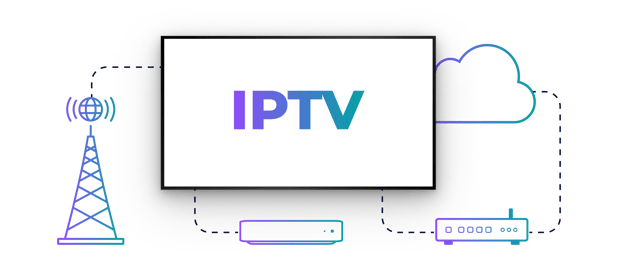
Instead of deploying proprietary hardware, operators distribute their TV service through environments such as:
-
Smart TV platforms
- Retail Android TV / Google TV devices
- Amazon Fire TV
- Apple TV
- Other connected TV ecosystems
This shifts service delivery from vertically integrated hardware models to shared operating environments governed by external platforms.
Why telecom operators are moving toward IP-Only TV
The economic rationale is clear.
Reducing or eliminating the set-top box can lower hardware CAPEX, simplify logistics, reduce replacement and support costs, and accelerate time-to-market. It can also help operators scale TV services more flexibly across markets by leveraging devices consumers already own.
In a telecom environment shaped by margin pressure, shrinking ARPU, and rising content costs, that is a rational strategic move.
However, the savings achieved on hardware often reappear elsewhere: in software complexity, QA effort, performance optimization, certification work, and platform dependency.
IP only is not a cost shortcut. It is a cost reallocation toward operational complexity.
Set-Top Box vs. IP-Only TV: What changes structurally?
A traditional operator set-top box provides a highly controlled environment. Operators define the hardware baseline, manage the software lifecycle, control the user experience, integrate tightly with backend systems, and maintain predictable performance.
An IP-only model changes that equation fundamentally.
Instead of controlling the execution environment, operators must now deliver consistent service quality across heterogeneous devices, OS versions, firmware layers, and store ecosystems. Their role shifts from vertical owner to orchestrator within distributed environments governed by others.
This is more than a technical shift. It changes the operator’s position in the value chain.
In the set-top box model, differentiation is embedded in owned infrastructure. In the
IP-only model, differentiation depends on execution quality inside systems the operator does not fully control.
Device fragmentation becomes a core operational challenge
In a controlled STB environment, fragmentation is largely contained. The operator selects the chipset, defines performance baselines, manages the video stack, and validates a limited hardware set.
IP-only TV removes that control.
Services must now run across entry-level and premium Smart TVs, retail streaming devices, different memory and CPU profiles, varying decoding capabilities, and manufacturer-specific firmware behavior. Even within the same platform family, device performance and OS behavior can differ significantly.
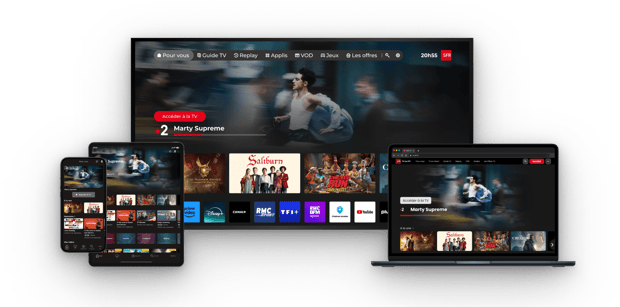
This has immediate consequences:
-
larger QA matrices
- more device-specific bugs
- inconsistent startup and playback behavior
- higher risk of degraded Quality of Experience
What was once a contained engineering issue becoming an ongoing cross-device operational discipline.
In IP-only models, removing hardware does not remove complexity. It redistributes it.
Certification and platform governance: Two distinct worlds
A common misunderstanding is to treat operator STB programs and IP-only app distribution as the same certification problem. They are not.
In practice, operators typically face two distinct certification tracks.
The first is the operator STB track, which may include environments such as Android TV Operator Tier on operator-managed set-top boxes. This involves system-level compliance, OEM or partner validation, controlled hardware baselines, and platform governance tied to the STB program.
The second is the IP-only app track, which applies to Smart TV platforms, retail Android TV / Google TV devices, streaming devices, and other connected TV ecosystems. Here, the constraints are different: app-store policies, DRM and playback compliance, OEM-specific behavior, review cycles, and regressions triggered by platform or OS updates.
This distinction matters because an operator may have no Operator Tier component in its IP-only strategy at all, yet still face substantial certification complexity.
Removing the set-top box does not remove governance constraints. It changes where they sit.
Performance, QA and video optimization become strategic capabilities
In an IP-only model, performance becomes less predictable because the operator no longer owns the environment in which the app runs.
Maintaining broadcast-like reliability over IP requires continuous work across several layers: adaptive bitrate tuning, player optimization, device capability handling, CDN resilience during peak events, memory management on lower-end devices, and telemetry strong enough to detect regressions quickly.
This is where the financial simplification narrative often breaks down.
What appears simpler from a hardware perspective often becomes more demanding from an operational one. Startup time, playback stability, UI responsiveness, and buffering behavior all become sensitive to variables the operator does not fully control.
Performance engineering is therefore no longer a downstream optimization task. It becomes central to the product model itself
App certification is a program, not a checkbox
For IP-only TV services, building the app is only part of the challenge. One of the most underestimated complexities lies in getting the app certified, keeping it certified, and managing compliance drift over time.
Certification complexity comes from several sources:
- DRM and playback compliance requirements by platform and device class
- app-store rules and review cycles that evolve over time
- OEM-specific behavior differences across firmware and player stacks
- OS updates outside operator control that can introduce regressions
- documentation and evidence packs required for approvals and partner validation
- regional security or content protection requirements
Operators that succeed in IP-only distribution do not treat certification as a one-time gate before launch. They treat it as an ongoing operational program.
That means clear release governance, repeatable validation evidence, automation-heavy QA, and monitoring systems capable of identifying issues quickly when a platform update changes behavior.
This is one of the hidden costs of IP-only TV: the complexity does not end at launch. In many cases, it starts there.
Data ownership and interface control remain strategic issues
A proprietary set-top box gives operators strong control over interface hierarchy, service prominence, recommendation logic, and data visibility.
Third-party TV operating systems change that balance.
Content discoverability may be shaped by platform-level recommendation layers, app store rankings, system overlays, and OS-native navigation patterns. Even when the operator app remains central, the surrounding environment influences how users encounter and return to the service.
This creates a new strategic tension. Operators may gain distribution efficiency while losing some interface sovereignty.
At the same time, data visibility can become less complete or less direct, depending on the ecosystem. That affects personalization, analytics depth, monetization logic, and long-term control of the customer relationship.
In IP-only models, platform reach often comes with mediation.
What operators need to industrialize
The operators most likely to succeed with IP-only TV are not simply the ones that launch fastest. They are the ones that industrialize execution.
That typically means building capability across five areas:
- cross-device performance engineering
- fragmentation-aware QA and regression prevention
- certification readiness and release governance
- CDN and peak-event resilience
- telemetry and operational response frameworks
This is the real maturity curve of IP-only TV.
The challenge is not just shipping an app. It is sustaining service quality, compliance, and product consistency across ecosystems that evolve continuously.
Where Wiztivi adds value
This is precisely where technical partners can make a measurable difference.
Wiztivi can help operators strengthen IP-only execution through:
-
connected TV application engineering across Smart TV and retail device ecosystems
- performance optimization for startup time, playback stability, and UI responsiveness
- certification readiness, including compliance validation, evidence packs, and governance processes
- fragmentation mitigation through device profiling, compatibility strategy, and QA automation
- operational playbooks for monitoring, incident response, and post-update validation
For operators, this kind of expertise is increasingly strategic. The challenge is no longer simply building the service. It is building the technical and organizational discipline required to keep it reliable at scale.
Is IP Only TV a cost optimization or a strategic risk?
The answer is both.
IP-only TV can reduce hardware burdens, accelerate rollout, and increase distribution flexibility. But it also introduces new forms of dependency, complexity, and execution risk.
The strategic divide will not be between operators that adopt IP-only and those that do not. It will be between operators that treat IP-only as a genuine operating model transformation and those that treat it as a hardware cost-reduction exercise.
That distinction matters because the long-term risks are not only technical. They affect product differentiation, customer experience, roadmap autonomy, and the operator’s position within the TV value chain.
The 3–5 year outlook for operator TV distribution
Over the next three to five years, three scenarios are likely to shape the market.
The first is hybrid model dominance, where premium households continue to receive advanced operator hardware while mass-market users shift increasingly toward IP-only services.
The second is platform consolidation pressure, with global TV operating systems gaining more influence over discovery, navigation, and service prominence.
The third is execution maturity as a competitive advantage. Operators that master fragmentation, certification, and performance engineering will be better positioned to deliver consistent service quality while protecting brand value and customer trust.
Across all three scenarios, the decisive factor is not simply platform presence. It is operational excellence.
Conclusion: IP-only tv requires more than cost rationalization
For telecom operators, replacing the set-top box is not just a financial decision. It is a structural repositioning within the TV ecosystem.
Success depends on the ability to operate effectively across fragmented device environments, evolving app ecosystem rules, and ongoing certification requirements. In this context, certification cannot be treated as a one-time milestone. It must be managed as a continuous program shaped by DRM constraints, store policies, OEM variability, and OS-driven regression risk.
For operators evaluating IP-only strategies, technological sovereignty depends less on hardware ownership than on the ability to deliver consistent Quality of Experience, sustain compliance at scale, and maintain control within complex platform environments.
That is what will determine whether IP-only becomes a strategic evolution—or a gradual loss of control.